

Table of Contents
Toggle
Part 1: Overview of Polypropylene (PP)
Table of Contents
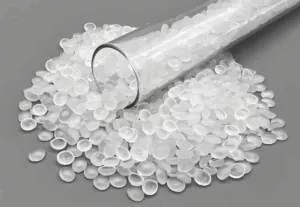
TogglePolypropylene (PP) is a thermoplastic polymer commonly used in CNC machining due to its excellent balance of strength, chemical resistance, and low cost. It’s ideal for producing lightweight, durable parts with good fatigue resistance and electrical insulating properties, making it suitable for various applications in industries such as automotive, medical, and consumer goods.

Part 2:Types of Polypropylene (PP)
Homopolymer PP:
Homopolymer PP, the most common type, offers superior stiffness and chemical resistance, making it suitable for general-purpose applications. Its ability to withstand temperatures up to 100°C makes it ideal for a range of mechanical parts.
General Purpose PP:
General Purpose PP is known for its versatility and is used in various applications from packaging to automotive components, balancing cost-effectiveness with performance.
High-Temperature PP:
High-Temperature PP can endure elevated temperatures without deforming, making it suitable for applications in environments where heat resistance is critical.
Copolymer PP:
Copolymer PP is further divided into random and block copolymers. This type combines ethylene with propylene, enhancing flexibility and impact resistance, especially at lower temperatures.
Random Copolymer PP:
Random Copolymer PP is flexible and transparent, suitable for applications requiring clarity and impact strength at low temperatures.
Block Copolymer PP:
Block Copolymer PP offers better impact resistance and is less susceptible to stress cracking, making it suitable for demanding applications.
Custom CNC Machining For Your Industries
We provide custom solutions to all our customers and offer free consulting or samples that you can take advantage of.
Part 3:Reinforcements
Talc-Filled PP
Talc-filled PP improves rigidity and dimensional stability, making it suitable for parts that require structural integrity.
Glass fiber reinforcement enhances strength and heat resistance, ideal for applications in automotive and industrial sectors.
Carbon fiber reinforcement provides exceptional strength-to-weight ratios, making it suitable for high-performance applications in aerospace and automotive industries.
Part 4:Material Properties of Polypropylene (PP)
Polypropylene (PP) is a versatile thermoplastic with distinctive properties that make it suitable for a variety of CNC machining applications. Its unique chemical structure, comprising a long chain of propylene monomers, results in several beneficial characteristics that are crucial for manufacturing processes.
Chemical Structure and Molecular Weight:
Polypropylene’s molecular structure consists of repeating units of propylene, contributing to its high tensile strength and flexibility. The molecular weight can vary, affecting the material’s overall properties such as impact resistance and thermal stability. Higher molecular weight PP typically exhibits greater strength and resistance to environmental stress.
Crystallinity:
The crystallinity of PP plays a significant role in its physical and thermal characteristics. A higher degree of crystallinity improves its stiffness and thermal resistance, making it more suitable for applications that require rigidity. Conversely, lower crystallinity yields a more flexible material, ideal for various consumer products.
Physical and Thermal Characteristics:
Density: With a density of approximately 0.9 g/cm³, polypropylene is one of the lightest synthetic polymers. This low density contributes to cost savings in shipping and handling while enhancing the overall efficiency of the final products.
Melting Point: The melting point of PP ranges between 160°C and 170°C, allowing it to maintain structural integrity under moderate thermal conditions. This thermal resistance makes it suitable for applications like food containers that are subject to heat.
Glass Transition Temperature: The glass transition temperature of PP is around -20°C, which means it retains its mechanical properties even at low temperatures.
Thermal Conductivity: PP exhibits low thermal conductivity, which is beneficial in applications requiring insulation. This property minimizes heat loss, making it ideal for thermal packaging.
Mechanical Properties:
Tensile Strength: PP has a tensile strength ranging from 25 to 35 MPa, providing good mechanical performance in various applications.
Flexural Modulus: This property measures the material’s stiffness; PP typically has a flexural modulus of about 1,200 to 1,800 MPa. This makes it suitable for components that require both flexibility and strength
Impact Resistance: Polypropylene demonstrates impressive impact resistance, crucial for products subjected to sudden force or stress. Its notched impact strength can be as high as 2.6 kg.cm/cm, making it resilient in demanding environments.
Elongation at Break: The material can stretch significantly before breaking, with elongation percentages often reaching 200-600%, allowing for some deformation under stress.
Part 5:CNC Machining Considerations
Cutting Speed:
Cutting speed is a crucial parameter in CNC machining, representing the speed at which the tool engages the material. For polypropylene (PP), the optimal cutting speed typically ranges from 150 to 300 meters per minute, depending on the specific type of PP and tooling used. Higher speeds may lead to excessive heat generation, risking deformation or melting of the material, while lower speeds can result in longer machining times and reduced efficiency. It’s essential to balance cutting speed with feed rate to maintain optimal machining conditions.
Feed Rate:
The feed rate indicates how quickly the cutting tool moves through the material during machining. In the case of PP, a moderate feed rate is recommended, usually around 0.05 to 0.15 mm per tooth for milling operations. This balance helps in controlling heat build-up and ensuring a smooth surface finish. Feed rates that are too high can lead to increased tool wear and potential damage to the workpiece, while too low a feed rate can cause the tool to rub instead of cut, generating unnecessary heat and reducing tool life.
Depth of Cut:
Depth of cut refers to the thickness of the material removed in one pass of the cutting tool. For polypropylene, a shallow depth of cut (typically around 1-3 mm) is often preferable, especially in initial machining passes. This minimizes the risk of excessive heat generation and allows for more precise control over the machining process. Deeper cuts may require adjustments to cutting speed and feed rate to prevent overheating and material distortion.
Part 6Applications
Automotive Components:
Polypropylene is widely used in the automotive industry due to its lightweight and robust properties. Common applications include dashboards, interior trim, and battery cases, where its chemical resistance and low density offer significant advantages.
In the medical field, PP is valued for its biocompatibility and sterilizability. It is commonly used for syringes, containers, and various medical device housings, ensuring safety and reliability in sensitive application.
Consumer Products:
Polypropylene is prevalent in consumer products such as packaging, household items, and toys. Its versatility and cost-effectiveness make it an ideal choice for a wide range of applications where durability and light weight are essential.
Part 7:Advantages of PP
Chemical Resistance:
One of the standout features of polypropylene is its excellent chemical resistance. It can withstand exposure to many acids, bases, and solvents, making it suitable for various industrial applications.
Low Density:
PP is notably lightweight compared to other engineering plastics, which contributes to reduced shipping costs and improved fuel efficiency in transportation applications.
Cost-Effectiveness:
Polypropylene offers an attractive balance between performance and cost, making it a popular choice in both high-volume and specialty applications
Part 8:Limitations of PP
Low Temperature Performance:
While PP performs well at moderate temperatures, it can become brittle at low temperatures, limiting its application in cold environments.
UV Sensitivity:
Polypropylene can degrade under prolonged UV exposure, leading to discoloration and loss of mechanical properties. This necessitates protective coatings or additives for outdoor applications.
Flammability:
Although it has a high ignition temperature, polypropylene is still flammable. Special care must be taken in applications where fire resistance is critical.
Part 9:Quality Control and Industry Standards
Dimensional Inspection:
Accurate dimensional inspection is vital to ensure that machined components meet precise specifications. Techniques like laser measurement and coordinate measuring machines (CMM) are commonly employed to verify dimensions.
Material Testing:
Material testing, including tensile and impact testing, ensures that the polypropylene meets the required mechanical properties for specific applications. This is crucial for applications in industries like automotive and medical.
Non-Destructive Evaluation:
Non-destructive testing methods, such as ultrasonic testing and dye penetrant inspections, are used to identify internal flaws without damaging the parts.
ASTM Standards:
Polypropylene products often need to comply with ASTM standards, which define specifications for various grades of PP based on their intended applications.
ISO Specifications:
ISO standards provide guidelines for quality management systems, ensuring that manufacturers meet international quality benchmarks in the production of polypropylene components.
FDA Regulations:
For medical and food-related applications, adherence to FDA regulations is crucial to ensure that the materials used are safe for contact with food and medical devices.
Conclusion
In conclusion, polypropylene (PP) is a versatile material for CNC machining, offering lightweight, chemical resistance, and cost-effectiveness for applications in automotive, medical, and consumer products. Understanding key machining parameters is vital for quality outcomes, while being mindful of its limitations, such as low temperature performance and UV sensitivity. Adhering to industry standards ensures safety and reliability, making partnership with experts like AstroCNC essential for maximizing the benefits of PP in your projects.
Custom CNC Machining For Your Industries
We provide custom solutions to all our customers and offer free consulting or samples that you can take advantage of.
Leave A Comment