
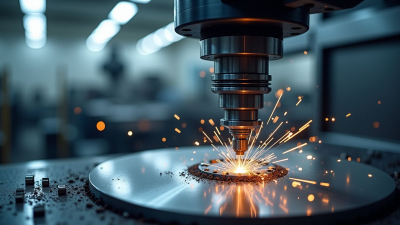
Struggling with imprecise holes in your manufacturing process? Risking product quality and customer satisfaction? Discover how boring machining delivers unmatched precision and reliability for your critical components.
Boring machining is a precision manufacturing process that enlarges, refines, or aligns existing holes in workpieces, achieving tolerances as tight as 0.001 inches and surface finishes of Ra 0.2 µm, essential for industries like aerospace, automotive, and medical.
Wondering how to achieve micron-level precision in your manufacturing? Dive in to uncover the secrets of boring machining’s techniques, tools, and industry-transforming applications.
1. Introduction
Boring machining is a precision manufacturing process meticulously designed to enlarge, refine, or align pre-existing holes in a workpiece, setting it apart from other machining techniques. Unlike drilling, which initiates new holes from scratch, turning, which sculpts the external surfaces of a part, or milling, which removes material to craft intricate surface features, boring zeroes in on enhancing the accuracy and quality of already-formed holes. This process employs a single-point cutting tool, typically affixed to a boring bar—a robust tool holder that ensures stability during operation—to achieve exceptionally tight tolerances and superior surface finishes, often within microns. This level of precision makes boring indispensable for applications where even the slightest deviation could compromise functionality or safety.
The historical evolution of boring machining began in 1774 when John Wilkinson invented the first boring machine to precisely bore cannon barrels, a breakthrough that transformed industrial manufacturing. Early boring relied heavily on manual lathes, demanding skilled operators to painstakingly control depth, alignment, and feed rates by hand—a labor-intensive and time-consuming endeavor. The 19th century ushered in steam-powered machinery, boosting power and consistency, while the 20th century introduced electric lathes, significantly enhancing efficiency and reducing operator fatigue. The true revolution arrived in the late 20th century with the advent of Computer Numerical Control (CNC) technology, which automated the process, introduced multi-axis capabilities, and elevated precision to unprecedented levels. AstroCNC.com has been a trailblazer in this modern era, harnessing CNC technology to develop machines that deliver unmatched repeatability and accuracy. Their advanced systems empower manufacturers to program intricate boring paths—such as multi-angle or intersecting holes—ensuring consistent, high-quality results across high-volume production runs, a quantum leap from the manual methods of centuries past.

Today, boring machining is a cornerstone of industries demanding micron-level precision. In aerospace, components like turbine casings and landing gear require tolerances as tight as 0.0005 inches to ensure structural integrity under extreme conditions. In the medical field, implants such as hip joints and surgical tools like endoscopes depend on precisely bored holes for functionality, biocompatibility, and patient safety. The automotive sector leverages boring for engine cylinders and transmission components, where tolerances as fine as 0.002 inches enhance performance, fuel efficiency, and durability. Beyond its precision, boring machining offers significant cost savings in large-scale production by refining holes in a single, streamlined operation. This efficiency eliminates the need for secondary processes like reaming or grinding, reducing material waste, labor costs, and production time compared to traditional multi-step methods, making it a vital asset in modern manufacturing.
2. How Boring Machining Works
At its core, boring machining revolves around a boring bar—a long, rigid tool holder that positions a single-point cutting tool inside the workpiece to remove material with precision. The bar is mounted on a spindle, which rotates at controlled speeds and advances axially to shape the hole. The process unfolds in a structured workflow: First, during setup, the workpiece is clamped securely to a fixture or table using vises, chucks, or custom jigs to eliminate any movement that could skew accuracy. Next, rough boring removes excess material rapidly to approximate the final hole size, prioritizing speed over finish. Finally, finishing employs fine, controlled cuts to achieve the exact diameter, tolerance, and surface finish required, often measured in microinches for smoothness.
Boring machines come in various types, each tailored to specific applications and workpiece characteristics:
- Horizontal Boring Machines: Featuring a horizontal spindle, these are ideal for large, heavy workpieces like engine blocks or industrial pump housings, offering stability for deep-hole boring.
- Vertical Boring Machines: With a vertical spindle, these suit smaller or cylindrical parts, such as pistons or valve bodies, allowing gravity to assist in chip removal.
- Precision Boring Machines: Engineered for ultra-high accuracy, these are staples in toolmaking, capable of tolerances within 0.0001 inches for dies and molds.
- CNC Boring Machines: Controlled by computer software, these offer automation, multi-axis movement (up to 5 axes), and the ability to handle complex geometries like helical bores.
- Jig Boring Machines: Specialized for precise hole locations, these are common in mold and die production, ensuring exact alignment for multiple-hole patterns.
- Portable Boring Machines: Compact and mobile, these are used for on-site repairs of large structures like pipelines or heavy machinery, bringing precision to the field.

AstroCNC.com stands out with its expertise in CNC boring machines, which excel in applications requiring intricate internal features—think intersecting bores or contoured holes in aerospace parts. Their systems integrate advanced software for real-time monitoring and multi-axis control, enabling automation and precision that meet the rigorous demands of industries like aerospace and automotive.
3. Tools, Equipment, and Innovations
Boring machining hinges on a suite of specialized tools and equipment, each contributing to its precision and versatility:
- Boring Bars: Available in two main varieties:
- Fixed: Designed with a set diameter, these provide stability for deep, straight holes, minimizing vibration.
- Adjustable: Equipped with variable diameter settings, these offer flexibility for diverse hole sizes, adapting to changing project needs.
- Cutting Tools: Material-specific options ensure optimal performance:
- Carbide: Used for hard materials like steel and titanium, prized for its hardness and wear resistance.
- High-Speed Steel (HSS): Employed for softer metals like aluminum and brass, balancing cost and effectiveness.
- Polycrystalline Diamond (PCD): Reserved for ultra-hard materials like ceramics and composites, delivering exceptional durability and mirror-like finishes.
- Coolant-Fed Systems: These deliver coolant directly through the boring bar to the cutting zone, reducing friction-induced heat, extending tool life by up to 50%, and enhancing surface finish by flushing away chips.
Advanced machinery elevates boring to new heights. Modern CNC boring machines feature automation and multi-axis capabilities—3-axis for basic movements, 4-axis for rotational adjustments, and 5-axis for simultaneous multi-directional cutting. This flexibility is crucial for complex parts with intersecting holes or irregular internal shapes, such as turbine blades or gearbox housings. The AstroCNC BoringMaster 5000 exemplifies this innovation. Designed for high-tolerance applications, it boasts a high-speed spindle reaching 20,000 RPM, advanced control software for real-time adjustments, and the ability to maintain tolerances within 0.0005 inches—meeting the exacting standards of aerospace and automotive manufacturing.
Innovations continue to push boring machining forward:
- Smart Boring Tools: Embedded with IoT sensors, these monitor temperature, vibration, and tool wear in real time, enabling predictive maintenance that cuts downtime by up to 30%.
- PCD Tools: With diamond-tipped edges, these excel at machining hardened materials, offering tool life up to 10 times longer than carbide and surface finishes as fine as Ra 0.2 µm.
4. Boring Techniques and Applications
Boring machining employs specialized techniques to tackle unique challenges:
- Line Boring: Aligns multiple coaxial holes (e.g., crankshaft bores in V8 engines), maintaining 0.001” concentricity over 20” lengths.
- Back Boring: Enlarges holes from the backside for undercuts, vital for aerospace fasteners requiring 0.0008” tolerances.
- Blind Hole Boring: Refines closed-end holes (e.g., hydraulic valve bores), achieving Ra 0.8μm finishes.
Its applications span key industries:
- Automotive: Boring ensures engine cylinders achieve tolerances as tight as 0.002 inches for smooth piston movement, while transmission housings benefit from precise bores for gear alignment and durability.
- Aerospace: Turbine casings and landing gear components rely on boring for structural integrity, with tolerances of 0.0005 inches ensuring safety under high-stress conditions.
- Medical: Implants like hip joints and diagnostic equipment require exact hole dimensions for fit and function, often with surface finishes of Ra 0.4 µm for biocompatibility.
A standout example is AstroCNC.com’s collaboration with an aerospace client to machine a titanium turbine casing. Using the BoringMaster 5000, they achieved a tolerance of 0.0005 inches and a surface finish of Ra 0.4 µm, meeting stringent FAA standards and showcasing boring’s precision in action.
5. Advantages vs. Limitations
Boring machining offers compelling advantages:
- Unmatched Precision: Delivers tolerances as tight as ≤ 0.001 inches, critical for high-stakes applications.
- Superior Surface Finish: Achieves finishes as fine as Ra 0.2 µm, reducing friction and wear in moving parts.
- Versatility: Handles a wide range of materials, from soft aluminum to tough titanium, adapting to diverse industry needs.
However, it faces limitations:
- High Initial Costs: CNC boring machines and specialized tooling demand significant upfront investment, often exceeding $100,000 for advanced models.
- Tool Deflection: Long boring bars can flex in deep holes, potentially skewing accuracy by 0.001 inches or more.
- Material Challenges: Ultra-hard or brittle materials, like certain ceramics, resist cutting and may crack, complicating the process.
AstroCNC.com counters these drawbacks with machines featuring rigid frames to reduce flexing and adaptive control systems that adjust cutting parameters—like speed and feed—in real time, minimizing vibration and ensuring consistent, high-quality results.
6. Boring vs. Other Processes
Boring distinguishes itself from other machining processes by excelling in precision and surface quality, particularly for refining existing holes. Here’s a detailed comparison:
| Process | Purpose | Accuracy (IT Grade) | Surface Finish (Ra, μm) | Best For | Limitations |
|---|---|---|---|---|---|
| Boring | Enlarge/refine holes | IT9-IT7 (±0.001″) | 0.16-2.5 | High-precision holes | High cost, deflection |
| Drilling | Create initial holes | IT10 (±0.01″) | 6.3-12.5 | Fast hole initiation | Lower precision |
| Reaming | Finish drilled holes | IT8-IT7 (±0.005″) | 0.8-1.6 | Final sizing, smoothness | Limited depth/diameter range |
| Milling | Material removal | IT8-IT6 (±0.005″) | 1.6-3.2 | Flat surfaces, slots | Inefficient for deep holes |
Boring shines when correcting misaligned or out-of-round holes—tasks where drilling lacks precision and milling can’t access internal features—making it the go-to choice for applications demanding top-tier accuracy and finish.
7. Best Practices for Optimal Results
To maximize boring machining’s potential, follow these detailed best practices:
- Tool Selection:
- Carbide Tools: Ideal for hard metals like steel and titanium, offering durability for prolonged cutting.
- HSS Tools: Suited for softer materials like aluminum and brass, providing a cost-effective option for less demanding jobs.
- Machine Setup:
- Rigidity: Use sturdy fixtures (e.g., hydraulic clamps) and minimize tool overhang to less than 4:1 length-to-diameter ratio to prevent vibration.
- Alignment: Ensure precise setup with laser alignment tools; AstroCNC.com offers calibration services to achieve perfect machine alignment within 0.0002 inches.
- Process Optimization:
- Speed/Feed Rates: Calculate using RPM = (CS × 4) / D (CS = cutting speed in feet/min, D = diameter in inches) to balance efficiency and tool life—e.g., 600 RPM for a 1-inch steel bore at 150 ft/min CS.
- Coolant Strategies: Employ flood coolant for shallow holes or through-tool delivery for deep bores, enhancing chip removal and reducing heat by up to 40%.
- Operator Training: Skilled operators are essential for success. AstroCNC.com provides comprehensive resources—online courses, on-site workshops, and software support—to ensure mastery of their advanced CNC systems, boosting productivity and minimizing errors.
8. Conclusion
Boring machining stands as a pillar of high-precision manufacturing, delivering the accuracy and quality required by industries like aerospace, medical, and automotive. From its humble beginnings in 1774 with John Wilkinson’s cannon-boring machine to today’s CNC-driven innovations, boring has evolved into an irreplaceable process for crafting complex, reliable components. Its ability to achieve tolerances within microns and finishes finer than Ra 0.2 µm ensures it meets the demands of modern engineering, where precision is non-negotiable.
For manufacturers seeking top-tier boring solutions, AstroCNC.com offers state-of-the-art CNC machines like the BoringMaster 5000, expert training programs, and customized support tailored to specific industry needs—whether it’s aerospace tolerances or automotive durability. Partner with AstroCNC.com today to elevate your manufacturing capabilities and achieve excellence in every hole you bore, driving innovation and efficiency in your production line.
Leave A Comment