
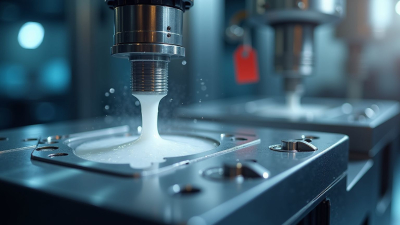
Struggling with high costs and slow prototyping? Traditional steel molds are pricey and slow. Aluminum injection molding cuts costs and speeds up production.
Aluminum injection molding uses aluminum molds for faster, cheaper plastic part production. It’s ideal for prototyping and low-volume runs, offering 30-50% cost savings and quicker turnaround than steel molds.
Discover how aluminum molds can transform your manufacturing. Read on for detailed comparisons, real-world examples, and expert strategies to optimize your production.
Introduction
What is Aluminum Injection Molding?
Aluminum injection molding is a highly efficient and versatile manufacturing process that utilizes molds crafted from aluminum to produce precise plastic parts through injection molding. In this technique, molten plastic, typically heated to temperatures between 200–300°C depending on the resin type, is injected into an aluminum mold cavity under high pressure, often reaching up to 20,000 psi. The plastic cools rapidly—20–40% faster than in steel molds—due to aluminum’s exceptional thermal conductivity of 237 W/m·K, compared to steel’s 50 W/m·K, and is then ejected as a finished or near-finished part. This rapid heat dissipation, combined with aluminum’s lightweight density of 2.7 g/cm³, lower cost (30–50% less than steel), and ease of machining, distinguishes it from traditional steel molds. Unlike steel, which is durable but expensive and time-intensive to produce, aluminum molds offer faster production timelines (1–3 weeks versus 6–12 weeks for steel), making them a preferred choice for prototyping, short-run production, and projects demanding quick turnaround times across industries like automotive, medical devices, and consumer electronics.
AstroCNC.com stands as a leader in precision CNC-machined aluminum molds, delivering tailored, high-quality solutions for manufacturers requiring fast-turn tooling. With expertise in crafting molds that achieve tight tolerances and rapid lead times as short as 1–2 weeks, they empower clients in sectors such as aerospace, medical, and consumer goods to achieve cost-effective production. Their advanced CNC technology and design optimization services position them as an ideal partner for agile manufacturing, enabling businesses to bring products to market swiftly and efficiently.
Why It Matters Today
In today’s fast-paced industrial landscape, the demand for rapid prototyping, flexible design iterations, and sustainable manufacturing practices is surging, particularly in fields like automotive, consumer electronics, and medical devices. Aluminum injection molding meets these needs by slashing lead times to as little as 1–2 weeks, reducing costs by 30–50% compared to steel molds, and leveraging aluminum’s 100% recyclability to align with eco-friendly trends. For instance, a typical aluminum mold for a 100 cm³ part might cost $4,000–$10,000, while a steel equivalent ranges from $10,000–$20,000, offering significant savings for small-to-medium enterprises (SMEs) and startups. This article explores the benefits, limitations, and real-world applications of aluminum molds, providing a detailed roadmap to assess their suitability for your manufacturing goals.
Section 1: Aluminum vs. Steel Molds – A Detailed Comparison
Choosing between aluminum and steel molds hinges on understanding their material properties, cost implications, production speeds, and durability. Below is an in-depth comparison enriched with specific data and practical insights.
Material Properties
Aluminum molds boast a low density of 2.7 g/cm³, making them lightweight and easy to handle, which cuts shipping and setup costs significantly compared to steel’s denser 7.85 g/cm³. Their standout feature is a thermal conductivity of 237 W/m·K—nearly five times steel’s 50 W/m·K—enabling rapid heat dissipation that shortens cooling times by up to 30–40%. For example, a 50-gram part might cool in 15–20 seconds in an aluminum mold versus 25–35 seconds in steel. However, aluminum’s softer nature, with a Brinell hardness of 60–100 HB, contrasts with steel’s 200–600 HB, making it less wear-resistant and more prone to damage from abrasive materials like glass-filled nylon.
Steel molds, while heavier and costlier to transport, offer unmatched durability due to their high hardness and ability to withstand temperatures up to 600°C, ideal for high-melt plastics like PEEK (melting at 343°C). Their lower thermal conductivity, however, slows cooling, extending cycle times and reducing throughput compared to aluminum.

Cost & Speed
Aluminum molds provide substantial cost savings, typically priced at $4,000–$10,000 for a standard 100 cm³ part mold, versus $10,000–$20,000 for steel. This 30–50% reduction stems from aluminum’s lower raw material cost ($1–1.5/lb versus $2–3/lb for steel) and faster CNC machining due to its softness, cutting labor costs by up to 40%. Machining an aluminum mold can take just 1–2 weeks—2–3 times faster than the 6–8 weeks often required for steel—making it a game-changer for tight deadlines. For instance, a complex mold that takes 100 hours to machine in steel might be completed in 40 hours in aluminum.
Steel molds, conversely, incur higher costs due to pricier materials and extended machining times driven by their hardness and complexity. This makes them less viable for projects prioritizing speed and budget over longevity.
Durability & Use Cases
Aluminum molds typically endure 10,000–100,000 cycles, depending on factors like alloy choice (e.g., 7075 aluminum) and maintenance practices. They excel in prototyping, bridge tooling, and low-to-medium volume production runs of 500–10,000 parts, such as dashboard components or phone casings. Steel molds, with lifespans exceeding 1,000,000 cycles, are built for mass production, handling high-volume runs of 100,000+ parts, including automotive parts or consumer goods molded from abrasive or high-temperature resins.
Quick-Reference Table: Aluminum vs. Steel Molds
| Aspect | Aluminum Molds | Steel Molds |
|---|---|---|
| Cost | $4,000–$10,000 (30–50% cheaper) | $10,000–$20,000 |
| Machining Time | 1–2 weeks (2–3x faster) | 6–8 weeks |
| Lifespan | 10,000–100,000 cycles | 1,000,000+ cycles |
| Thermal Conductivity | 237 W/m·K (faster cooling) | 50 W/m·K (slower cooling) |
| Cycle Time | 15–30 seconds (20–40% shorter) | 25–45 seconds |
| Density | 2.7 g/cm³ (lightweight) | 7.85 g/cm³ (heavier) |
| Hardness | 60–100 HB (softer) | 200–600 HB (durable) |
| Ideal Applications | Prototyping, low/medium runs | High-volume production |
Section 2: Advantages of Aluminum Injection Molds
Aluminum molds offer distinct advantages that make them a top choice for specific manufacturing scenarios. Below, each benefit is detailed with examples and data.
Cost Savings
Aluminum molds slash expenses through lower material costs ($1–1.5/lb versus $2–3/lb for steel) and reduced machining time, delivering overall savings of 30–50%. For example, a mold that takes 100 hours to machine in steel, costing upwards of $5,000 in labor, might be completed in 40 hours with aluminum, dropping labor costs by 40%. AstroCNC.com enhances this advantage by leveraging advanced CNC technology to produce precision molds at prices 20–30% below industry averages, making high-quality tooling accessible even to budget-conscious SMEs.
Speed to Market
The rapid production of aluminum molds—often ready in 1–2 weeks compared to 6–8 weeks for steel—accelerates product development cycles significantly. Aluminum’s high thermal conductivity further cuts cooling times by 20–40%; a 50-gram part might cool in 20 seconds versus 30 seconds in steel, boosting throughput. For instance, a complex mold that takes 40 days in steel can be machined in 10 days with aluminum. AstroCNC.com capitalizes on this, delivering molds in as little as 10 days, helping clients in time-sensitive markets like consumer electronics launch products in half the typical timeframe.

Design Flexibility
Aluminum’s lower hardness (60–100 HB) allows for quick modifications, reducing iteration time and costs by up to 25%. Adjusting an aluminum mold might take 4–6 hours, while steel could require 1–2 days. This flexibility is critical for industries like medical devices, where a syringe body design might undergo multiple revisions before approval, or consumer electronics, where phone casing prototypes evolve rapidly. AstroCNC.com supports this with design review services, optimizing features like wall thickness (1.5–3 mm), draft angles (1–3°), and corner radii (0.5 mm) for seamless production.
Sustainability
Aluminum’s 100% recyclability reduces environmental impact compared to steel, which is less flexible in recycling processes. Its lighter weight also cuts energy consumption during machining by 15–20%, aligning with green manufacturing initiatives. For eco-conscious brands producing sustainable packaging or IoT devices, this makes aluminum molds a strategic choice. AstroCNC.com integrates these benefits into their eco-friendly mold solutions, appealing to companies prioritizing sustainability without compromising performance.
Section 3: Limitations & Mitigation Strategies
While aluminum molds excel in many areas, they have limitations that can be managed with proactive strategies. Below, each drawback is paired with practical solutions.
Shorter Lifespan
Aluminum molds last 10,000–100,000 cycles, far less than steel’s 1,000,000+, due to their softer composition. To extend longevity by 20–30%, manufacturers can apply protective coatings like hard anodizing, which boosts surface hardness to 70 HRc, or nickel plating, adding a 10–20 µm durable layer. Regular maintenance, such as bi-weekly cleaning with isopropyl alcohol, further enhances durability. AstroCNC.com offers anodized molds and tailored maintenance plans, including inspections every two weeks, to maximize mold lifespan for clients.
Material Compatibility
Aluminum struggles with abrasive resins like glass-filled nylon (30% glass), which can erode the mold 50% faster than steel, and high-temperature plastics like PEEK (melting at 343°C), due to its lower heat resistance compared to steel’s 600°C threshold. To mitigate this, manufacturers should opt for softer, less abrasive plastics such as ABS, polypropylene, or polycarbonate, which extend mold life significantly. AstroCNC.com provides material consultation, testing compatibility with over 100 resins and recommending options with low abrasion (e.g., <10% glass fill) to ensure optimal performance.
Surface Finish Trade-offs
Steel molds achieve tighter tolerances (±0.001 in) and smoother finishes (Ra 0.1 µm) compared to aluminum (±0.005 in, Ra 0.4 µm post-polishing), making them preferable for high-aesthetic parts. For prototyping and most low-volume applications, aluminum’s finish suffices, but for enhanced aesthetics, additional polishing costing $200–$500 can improve surface quality. AstroCNC.com offers post-processing options like polishing and texturing to meet specific finish requirements, ensuring versatility across project needs.
Section 4: Applications & Industry Success Stories
Aluminum molds are versatile, delivering value across diverse industries and emerging applications. Below are detailed examples and case studies.
Prototyping & Low-Volume Production
In automotive, aluminum molds enable rapid prototyping of dashboard components, producing 1,000–5,000 units in 2–3 weeks for testing. In consumer electronics, phone casings are molded in batches of 2,000 for market trials, leveraging aluminum’s speed. Medical devices like disposable syringe bodies benefit from runs of 5,000–10,000, combining precision with cost-effectiveness. These applications highlight aluminum’s ability to deliver quick, affordable solutions for iterative and small-scale production.
Case Study Spotlight
AstroCNC.com partnered with a drone manufacturer to produce 750 lightweight ABS housings (50 g each) using an aluminum mold. Completed in 18 days for $4,800, the project saved 45% compared to a steel mold costing $8,700, meeting a critical launch deadline. Another success saw them deliver 500 ABS housings in 3 weeks for $6,000, a 40% savings over steel’s $10,000, showcasing aluminum’s edge in speed and cost for time-sensitive projects.
Emerging Uses
Custom packaging for luxury goods, such as sustainable plastic trays, utilizes aluminum molds for small runs of 1,000–5,000 units. In aerospace, lightweight brackets for drones are produced in batches of 1,000–5,000, capitalizing on rapid production. IoT devices, like smart sensor housings, benefit from aluminum’s flexibility for frequent design updates, while sustainable product lines leverage recyclable plastics, aligning with eco-trends.
Section 5: How to Choose – A Decision Framework
Selecting between aluminum and steel molds depends on project specifics. Below is a detailed framework to guide your decision.
Key Questions
- Production Volume: For runs under 10,000 units, aluminum’s cost-effectiveness shines; steel suits 100,000+ parts.
- Budget Constraints: Aluminum saves 30–50% upfront ($4,000–$10,000 vs. $10,000–$20,000), ideal for limited funds.
- Timeline: Need parts in under 3 weeks? Aluminum’s 1–2 week lead time outperforms steel’s 6–8 weeks.
- Design Iterations: Planning multiple revisions? Aluminum’s ease of modification cuts time and costs by 25%.
Partnering with Experts
AstroCNC.com enhances decision-making with free consultations, a material library featuring over 100 resins, and post-processing services like polishing and anodizing. Their design reviews ensure manufacturability, tailoring solutions to optimize efficiency and quality for your project.

Section 6: Technical Tips & Best Practices
Maximize aluminum mold performance with these expert-backed strategies.
Design Optimization
- Wall Thickness: Maintain uniform thickness of 1.5–3 mm to prevent sink marks and warping, ensuring consistent cooling.
- Draft Angles: Use 1–2° (ideally 2–3°) to facilitate easy part ejection, reducing wear on the mold.
- Radii: Incorporate 0.5 mm radii on corners to cut stress concentrations by 30%, enhancing part durability.
AstroCNC.com provides design reviews to refine these parameters, boosting mold efficiency and part quality.
Maintenance
- Cleaning: Remove plastic residue weekly with isopropyl alcohol to prevent buildup and maintain precision.
- Corrosion Prevention: Apply anti-corrosion sprays in humid conditions and store molds at <50% humidity to avoid degradation.
AstroCNC.com recommends bi-weekly inspections and offers maintenance plans to extend mold life by up to 30%.
Future Trends
- Hybrid Molds: Combining aluminum bases with steel inserts for high-wear areas balances cost and durability.
- AI-Driven Cooling: AI-optimized cooling channels can reduce cycle times by 15–20%, enhancing throughput.
AstroCNC.com is exploring these innovations to future-proof their mold offerings.
Section 7: Industry Insights & Expert Voices
Aluminum molds are reshaping manufacturing, particularly for agile and eco-conscious firms.
Quotes
- “Aluminum molds reduce lead times by 50%, empowering agile innovation.” – AstroCNC.com Lead Engineer
- “For short runs, aluminum’s cost and speed are unmatched.” – Expert, Hitopindustrial
Market Outlook
Adoption of aluminum molds is rising 18% annually, driven by SMEs and startups benefiting from lower entry costs. The push for sustainability fuels a projected 20% annual growth by 2030, as recyclable molds align with eco-trends, transforming manufacturing for small and large players alike.
Conclusion
Aluminum injection molding delivers a powerful mix of speed (1–2 week lead times), cost savings (30–50% less than steel), and flexibility, making it ideal for prototyping and low-to-medium runs up to 100,000 cycles. While its shorter lifespan and material limitations pose challenges, strategies like protective coatings and careful resin selection mitigate these drawbacks effectively.
For your next prototyping or short-run project, harness AstroCNC.com’s expertise in precision aluminum molds. Request a free consultation today to unlock rapid, cost-effective solutions tailored to elevate your manufacturing goals.
Leave A Comment